Role:
Lead UX Designer
Goal:
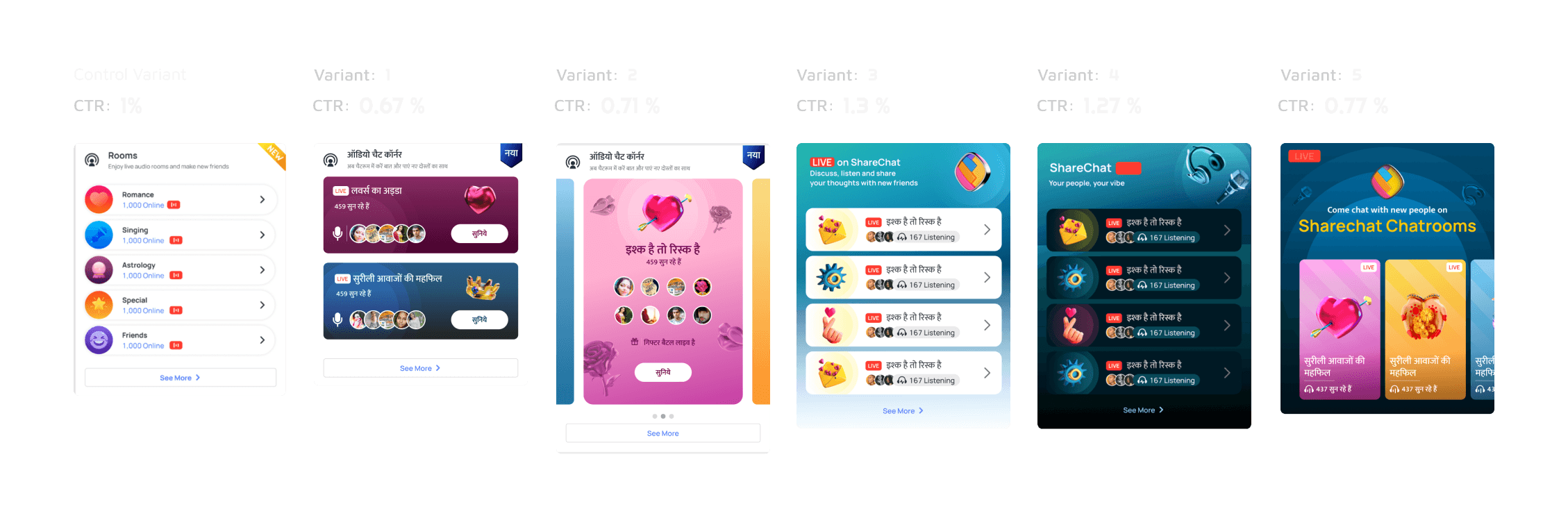
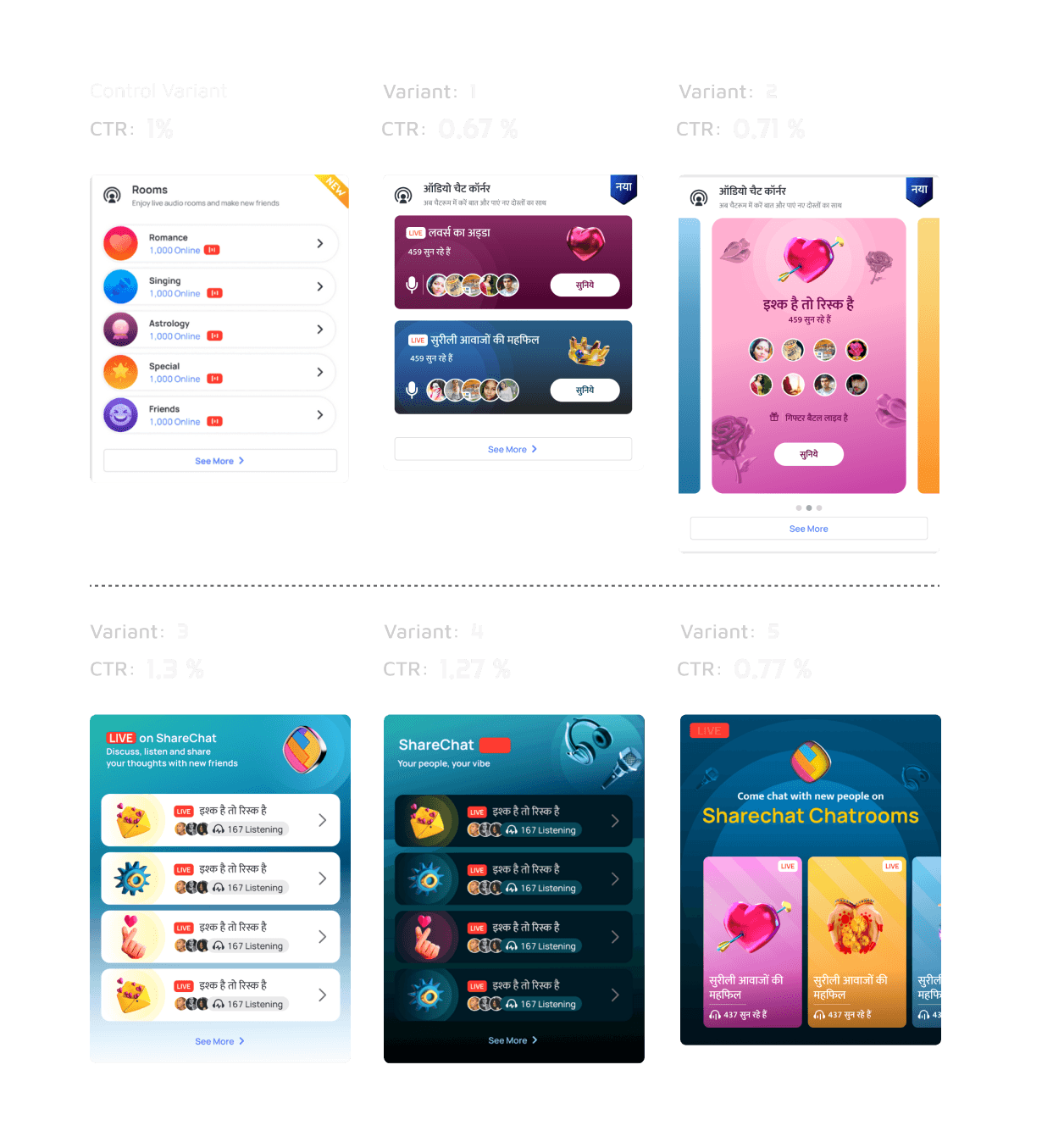
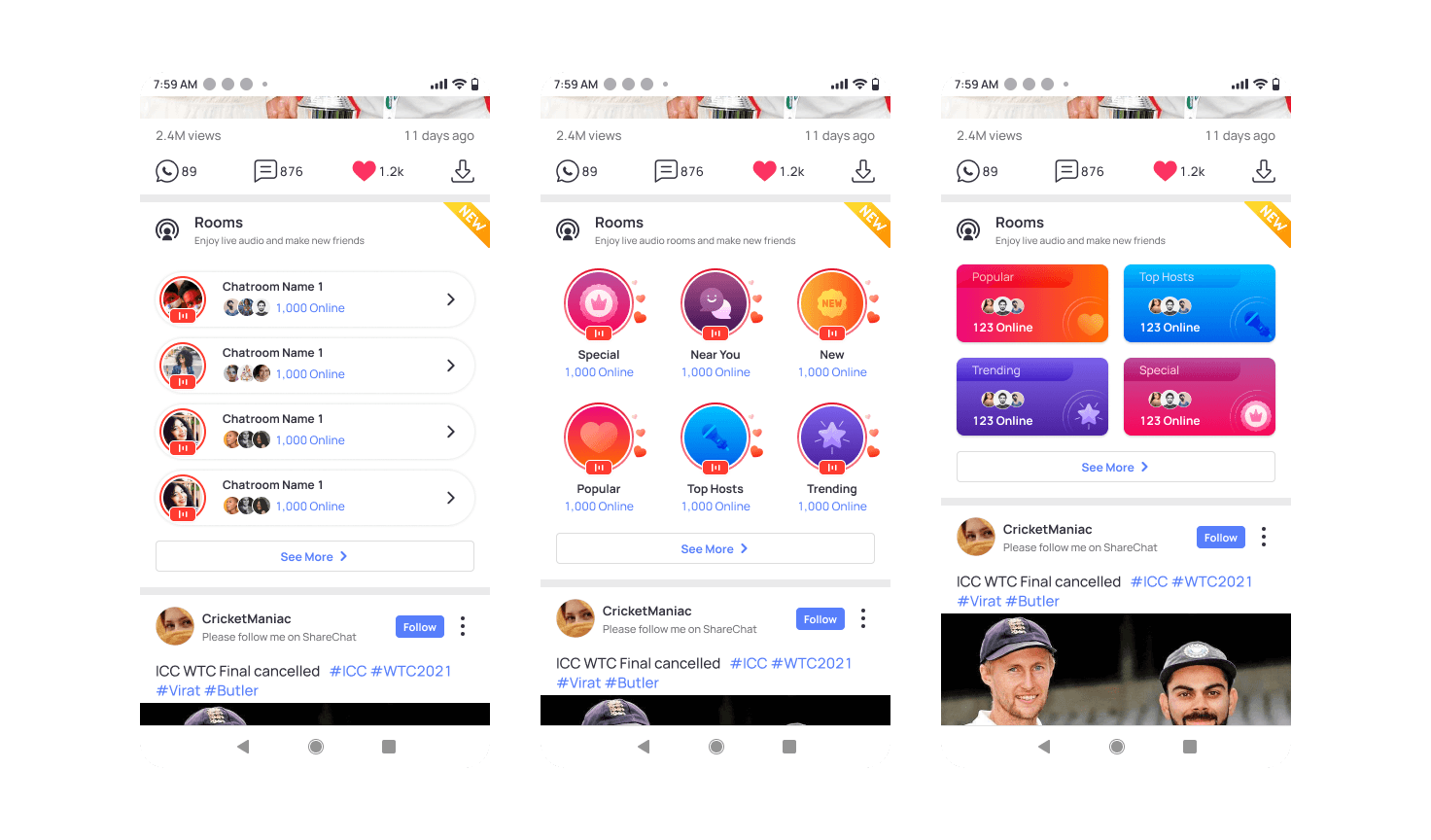
Optimize the design of chatroom cards on the trending feed to increase the conversion rate from static content consumption to chatroom participation.
Challenge 1: Ad-Like Design
Solution:
Introduced subtle brand identity elements to differentiate the chatroom cards from ads.
Used visually distinct styles and layouts to make the cards stand out as unique, engaging content rather than advertisements.
Challenge 2: Generic Information
Solution:
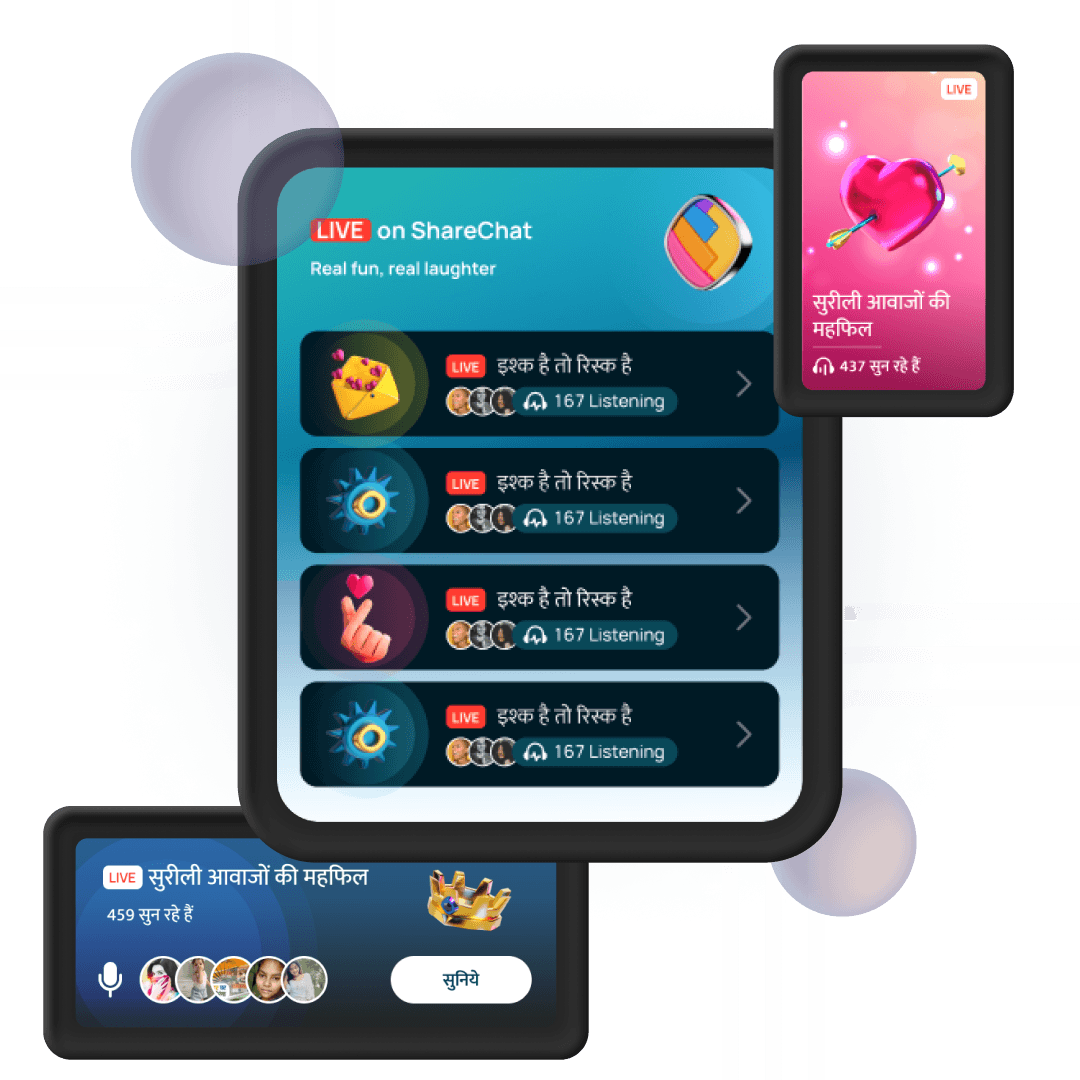
Replaced vague terms like “Online” with more descriptive terms like “Listening” or “Listeners” to indicate that the chatroom was an audio-based space rather than a text chat or video.
Added relevant illustrations related to the chatroom’s topic to make the purpose of the chatroom immediately clear to users.
Challenge 3: Misleading Chatroom Names
Solution:
Simplified chatroom names to clearly convey that they were rooms or groups focused on specific topics. The actual chatroom name could differ, but the card name needed to be straightforward.
Experimented with different card styles, such as using a “Live” tag and a headphone icon alongside the listening count, to visually emphasize that these were live audio chatrooms.
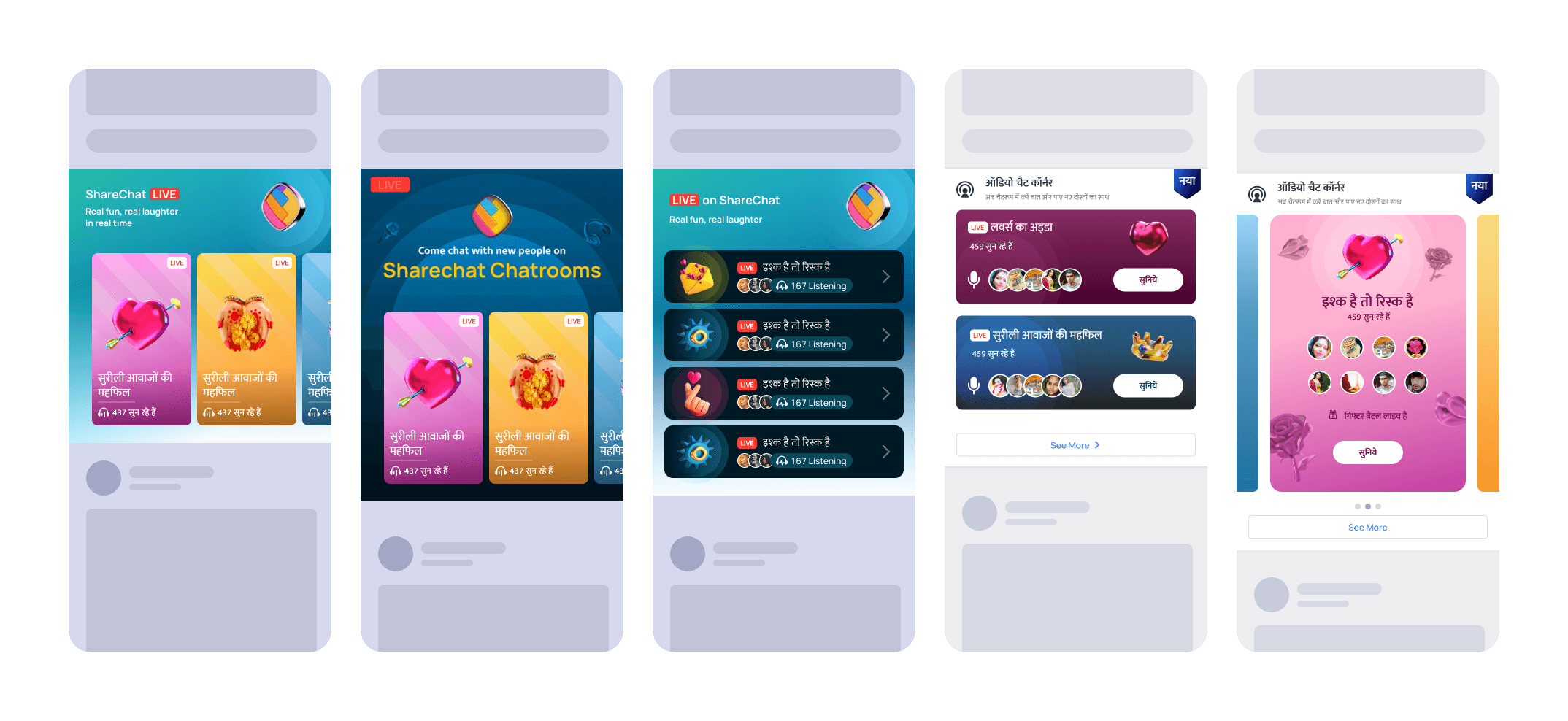
Custom Chatroom Names:
Simplified and clarified chatroom names on the cards to make it clear that these were group spaces related to specific topics.Descriptive Terms:
Replaced generic terms with “Listening” or “Listeners” to subtly inform users that these were audio chatrooms.Subtle Brand Identity:
Incorporated brand identity elements in a subtle way to differentiate the cards from ads without overwhelming the user.Visual Cues:
Added topic-related illustrations, “Live” tags, and headphone icons to visually emphasize the live, audio nature of the chatrooms.Experimentation with Layouts:
Tested different layouts and styles to find the most effective design for engaging users and encouraging chatroom participation.